Stanley Outpost
Dual-Zone Induction Cooktop
An induction cooktop aimed to rethink outdoor cooking through the lens of repairability, longevity, and circularity.
Featuring a dual-zone coil system for flexible power control, and a fanless passive heat sink for silent durability.
*Student project not endorsed or paid for by Stanley


A portable
Induction Cooktop...

...designed for a New Generation of adventure-seekers.


Over 110 years of making rugged, long-lasting products.


Built to Last.
Designed to Come Apart.
Sustainable Outdoor Cooking
Durability + Longevity - Fanless passive cooling to eliminate moving parts prone to failure. Reinforced housing for superior shock and heat resistance. Replaceable internal components for easy repairability.
Designed for Disassembly - No glued components. Screws + latch-based construction. Obvious graphics with clear recycling instructions

Parts + Assemblies
Simplified BOM
Part / Assembly
Cooktop Surface
Selector Switch
Upper Housing
Interface Control Board
Dual Coil Assembly
Power Selection Knob
Power Supply Board
Power Cord Assembly
Heat Sink
Frame
Lower Housing
Toggle Latch x4
Feet x4
Screws x4
Material
Glass-Ceramic
PAT6 Nylon
PAT6 Nylon
Fiberglass + Copper + LED
Copper Wire, PAT6 Nylon, Ferrite
TPU Shore D 30
Fiberglass + Copper
TPU Shore A 85
6061 Aluminum
A380 Aluminum
PA6 Nylon
PA6 Nylon, Zinc-Coated Steel
TPU Shore D 30
Zinc-Coated Steel
Production Process
Glass Forming, Tempering, coating
Injection Molding
Injection Molding
Etching, SMT, Soldering
Wire Drawing, Coil Winding, Injection Molding
Injection Molding
Etching, SMT, Soldering
Wire Extrusion, Connector Molding
Extrusion, CNC Machining
Metal Casting, Etching, Finishing
Injection Molding
Injection Molding, Metal Extrusion, Bending
Compression Molding
Stamping, Threading, Coating


Ergonomics + Component Validation
From 2D to 3D
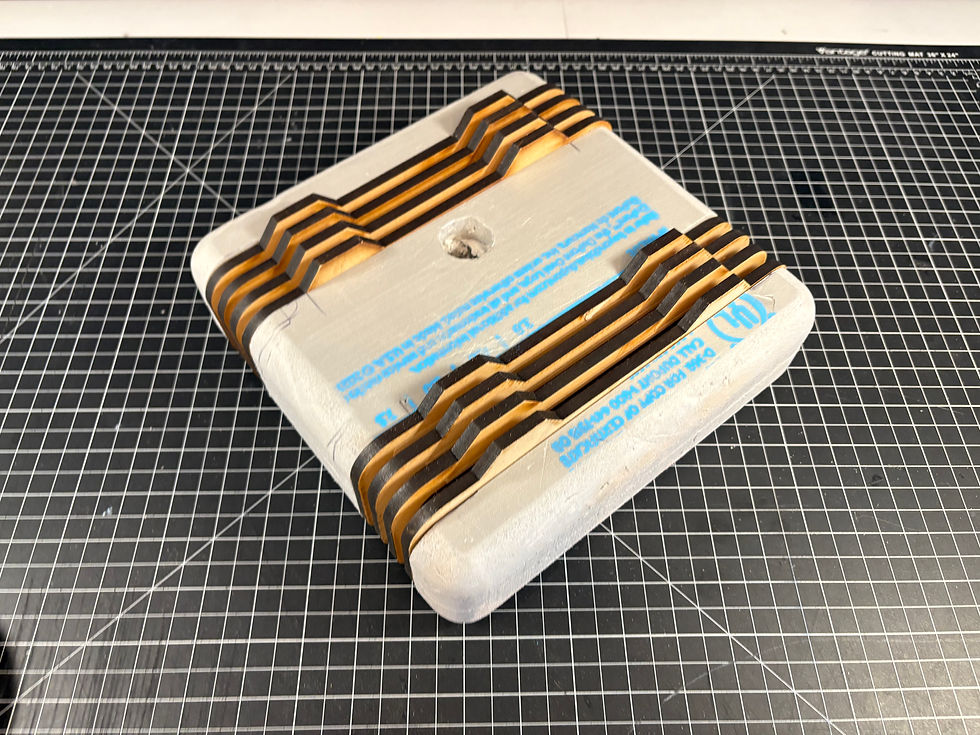
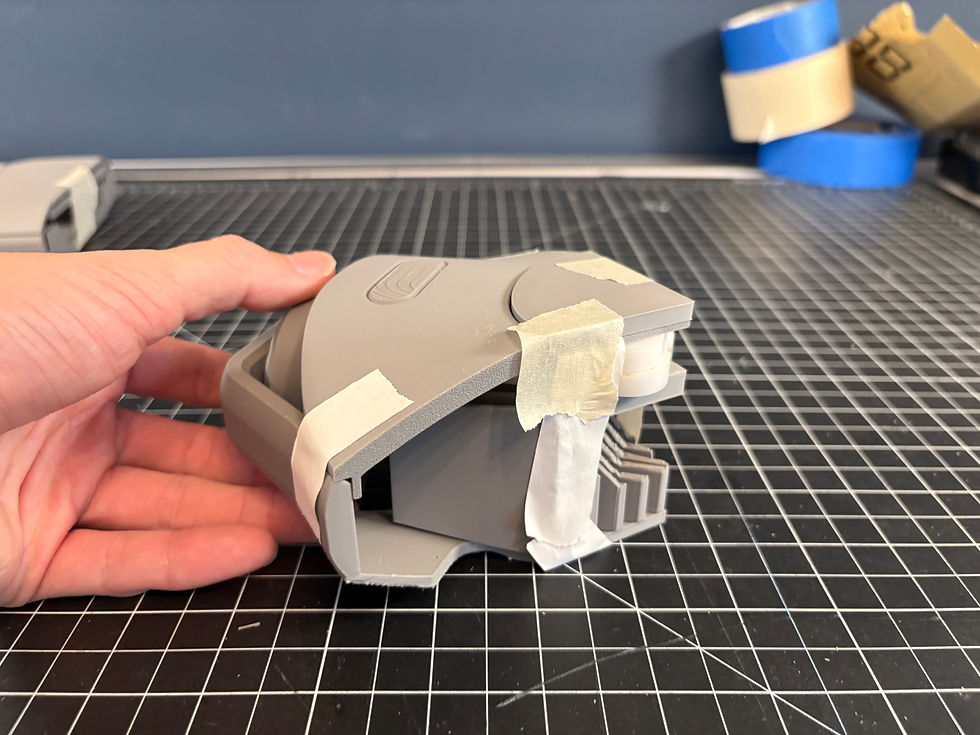
Concepts moved quickly into Solidworks to test scale, proportions, and internal fit. Fast CAD models + laser cut mockups and rough 3D prints to check size, ergonomics, and internal fit.
As the design converged, models became more detailed, integrating internal components and disassembly process. Iterative CAD and physical prototypes ensured the system worked as design evolved.




30 Second Disassembly
Designed for Recycling + Repair
Four tool free toggle latches on the base allow the unit to be released and fully disassembled in seconds. Clear color coding and on-product graphics guide separation and material sorting.
No glue, no hidden fasteners. If recycling or repair takes longer than 30 seconds, most products end up in the trash. This system is designed to remove that friction.




Simply Power
No Overcomplicated Settings, Digital Displays, or Apps
Power Level Indicator
-
Indicates cooking power level.
-
Transparent PA6 cover
-
LED bar connected to Interface Control Circuit Board
Power Knob
-
Molded + Textured finish for easy grip in gloves
-
TPU Shore D 30
-
Color Match wth Cord + Feet TPU
Coil Selector Switch
-
Indicates Power On and Inner or Outer Coil Selection
-
PAT6 Nylon
-
Color Match with Upper + Lower Housing


1200W Dual-Zone
Induction Coil
More Efficient, More Versatile Cooking
Inner coil (5-6”) for low power, small cookware.
Outer coil (8-9”) for large pans, even heating.
Manual selection prevents destructive interference.


Stanley LOOP
A Circular Future for Your Cooktop
A simple, prepaid return system empowering users to repair, refurbish, or recycle easily.

Recycled Paper
Wrap Label
-
Wrap with Logo, Name, Descriptions
-
Dyed with Low Impact Natural Dyes

Recycled Paper
Pulp Packaging
-
Embossed Details like Logo, Material Information
-
QR Code for Stanley Loop Return Information

1. Pack It Up
Reuse the original box and label, it’s pre-paid and ready to return.
2. Mark It: Recycle or Repair
Punch or check the box on the packaging to let us know:
_ Recycle
_ Repair & Return
3. Send It Back
Drop it off, no cost, no hassle.
4. Stanley handles the Rest
Parts are either refurbished, remanufactured, or responsibly recycled - never landfilled.
But Why Now?
We already have a saturated market of induction cooktops
Tasty by Cuisinart

$150
+ Not a black rectangle
- Price
- App Connectivity
+ Good UI/UX Design
Megachef Dual Cooktop

$116
- Black rectangle
- Price
+ Larger Coil Size
- Noisy
Megachef Dual Cooktop

$150
- Black rectangle
- Price
+ Dual Burners
- Durability Issues

The global portable generator market is projected to reach $6.79 billion by 2030, growing at a CAGR of 5.4%.
(Grand View Research, 2024)
Demand is fueled by :
Frequent power outages due to extreme weather.

Increased off-grid and outdoor activities.

Advancements in lithium-ion & battery technology.


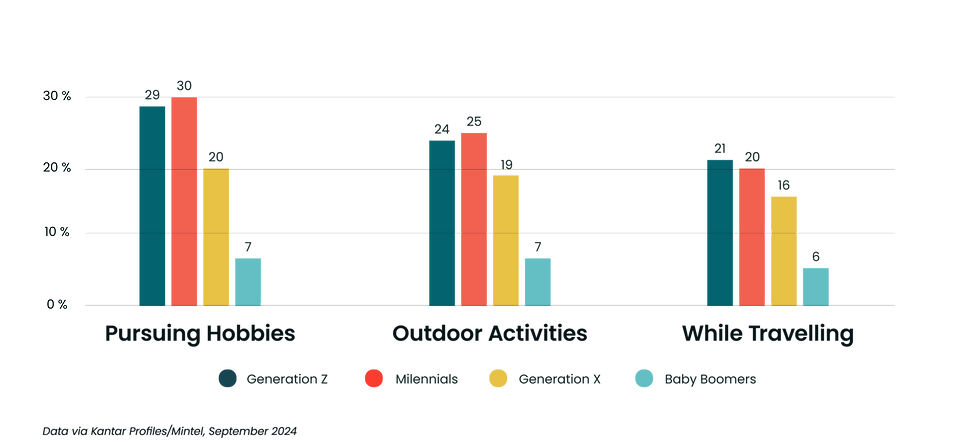
Nontraditional Kitchen Appliance Use
Generational Usage Trends
These trends create the perfect opportunity for a
robust, modular, sustainable induction cooktop built specifically for outdoor and off-grid environments.
1
Durability & Longevity : Users reported that existing induction cooktops break down after extended use, with failures in fans, temperature controls, and fragile casings
2
Power Consumption : Induction cooktops require high wattage, making them difficult to use for off-grid camping, EV owners, and emergency scenarios
3
Complexity & Interface Issues : Users find current induction cooktops overcomplicated, with confusing digital displays and difficult to navigate settings
4
Sustainability & End of Life : Induction cooktops have mixed-material construction, making them difficult to recycle

From Basic to Essential
Using Design Heuristics and
Sustainability Principles
This project used design heuristics and sustainability principles as active ideation tools. I built a custom digital deck of cards to quickly generate, challenge, and recombine ideas across form, function, and system thinking.
Sustainability strategies such as dematerialization, modularity, packaging-as-product, and design for disassembly were embedded early, shaping both the concepts and the way they were evaluated from the start.


Amazon Basics 1800W Induction Cooktop
I purchased an Amazon 1800W Induction Cooktop, and while benchmarking and in teardown, I found issues - Shocking, I know.